
The question gets asked in a particular tone, usually somewhere around a child's third birthday, and usually by a parent who has just watched another family's toddler count to twenty. What should a three year old know educationally? Behind it sits a quieter worry: is mine behind?
The short answer is that the educational picture at three looks almost nothing like what the phrase suggests. The skills that predict how a child does in school are, at this age, overwhelmingly about language, attention, self-regulation and play. Letters and numbers sit on top of those foundations, and a child who has the foundations will pick up the letters quickly when the time comes. A child who has memorised the letters without the foundations has not gained much.
This article sets out what developmental milestone guidance actually says at three, what the extras like counting and the alphabet are really worth, how much variation is normal, and what genuinely helps at home. It is written for parents, not for specialists, and it is not a screening tool or a substitute for talking to your child's doctor.
What the milestone guidance actually says
The clearest public reference is the CDC's Learn the Signs, Act Early program, which publishes milestone lists by age. Two things about these lists matter before reading them.
First, the CDC defines milestones as things most children, meaning 75 percent or more, can do by a given age. They describe the typical, not the required. A child missing one item on the list is not thereby delayed.
Second, the CDC states that its materials are not a substitute for standardised, validated developmental screening tools. The list is a conversation starter with a doctor, not a diagnosis.
With those caveats, here is the shape of what the CDC lists at three years, in its own four categories.
Social and emotional
Calming down within about ten minutes after you leave, as at a childcare drop off. Noticing other children and joining them to play.
The second one is worth pausing on. At two, children typically play alongside each other rather than with each other. By three, the shift toward noticing and joining is the beginning of genuinely social play, and that shift matters more for school readiness than any academic skill on this page.
Language and communication
Talking with you in conversation using at least two back-and-forth exchanges. Asking who, what, where or why questions. Saying what action is happening in a picture or book when asked, such as running, eating or playing. Saying their first name when asked. Talking well enough for others to understand, most of the time.
Notice how much of that is conversational rather than vocabulary-based. Two back-and-forth exchanges means a real exchange: you say something, the child responds on topic, you respond, the child responds again. That turn-taking is the engine of language learning, and it is a better thing to practise than flashcards.
The intelligibility item is also more specific than people expect. Most of the time, to people outside the family, is the standard. Family members become expert at decoding their own child, so a useful test is whether a familiar but non-household adult can follow what your child says.
Cognitive, meaning learning, thinking and problem solving
Drawing a circle when you show them how. Avoiding touching hot objects, such as a stove, when you warn them.
Only two items, and neither is academic. The circle is about imitation and motor planning rather than art. The hot stove item is about holding a rule in mind and applying it, which is an early form of the self-regulation that classroom learning depends on.
Movement and physical development
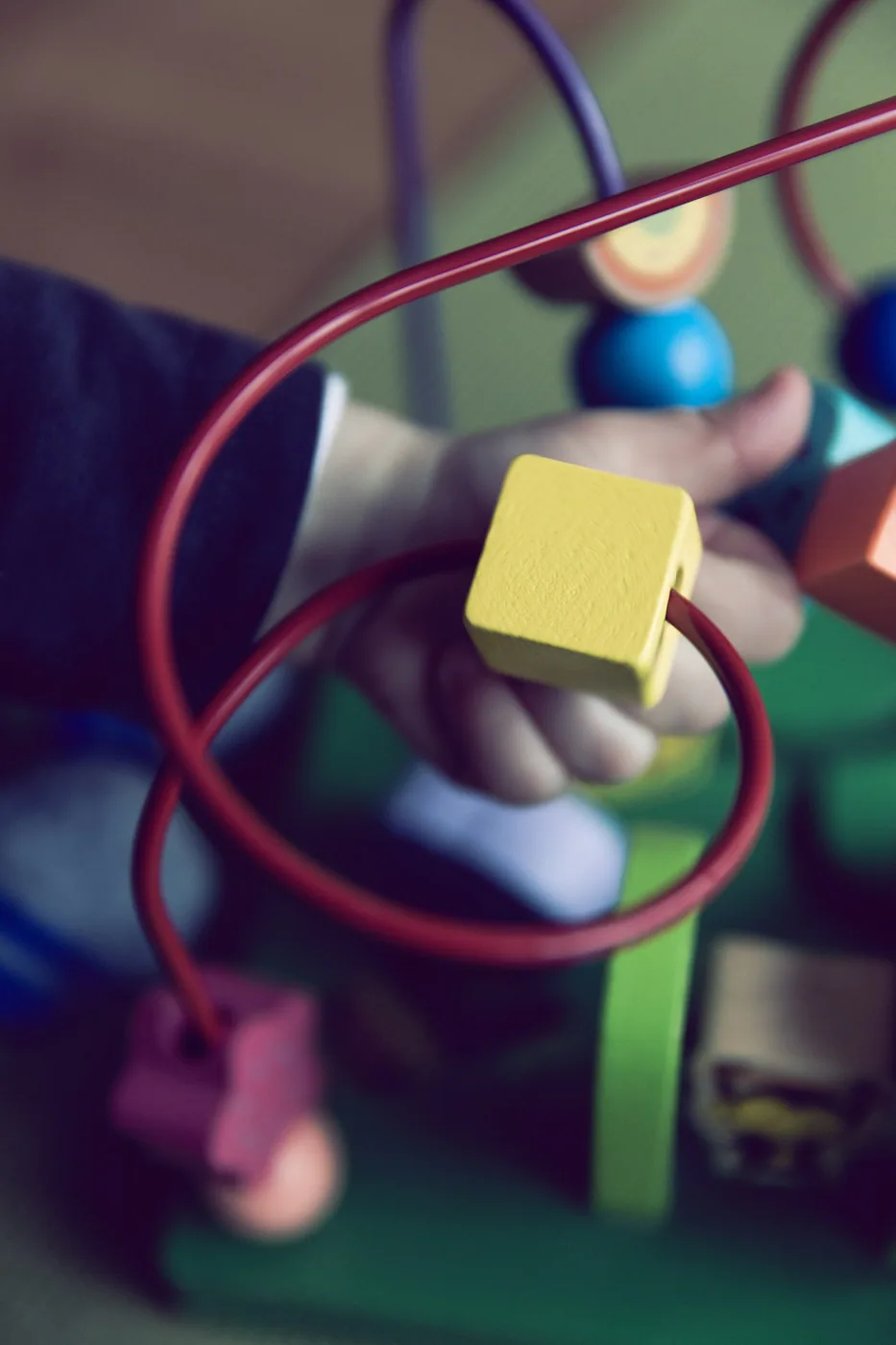
Stringing items together, such as large beads or macaroni. Putting on some clothes independently, such as loose pants or a jacket. Using a fork.
These are fine motor skills with a direct line to later schoolwork. The hand strength and coordination that string beads are the same ones that will hold a pencil. Dressing is also a self-care and sequencing task, which is why preschool settings care about it.
The things everyone asks about that are not milestones
Here is where most of the anxiety lives. Letters, numbers, colors and shapes are the things parents compare, and none of them appear on the three year milestone list.
The alphabet
Many three year olds can sing the alphabet song, and some can name individual letters. Both are genuinely useful, and neither is expected at three. There is also a real difference between the two. Singing the song is memorised sequence, closer to a nursery rhyme than to literacy. Recognising a letter out of sequence, especially the first letter of their own name, is the start of actual letter knowledge.
If you want to build toward literacy at three, the highest-value activity is not letter drilling. It is being read to, talked with and asked open questions about what is happening in a book. That builds vocabulary, narrative understanding and the idea that print carries meaning, which is what letters will later attach to.
Counting
Reciting numbers to ten or twenty is, like the alphabet song, memorised sequence. The meaningful skill is one-to-one correspondence: touching each object once while saying one number per object, and understanding that the last number said is how many there are. Many three year olds can count a small set of two or three objects this way, and many cannot yet. Both are normal.
Counting real things in daily life, three strawberries, two shoes, builds the correspondence idea far better than reciting higher and higher numbers does.
Colors and shapes
Color naming often arrives around this age and sometimes later, and late color naming on its own is rarely a concern. Shape recognition tends to follow. Both are vocabulary tasks, which means they come from hearing the words used in context rather than from testing.
Writing their name
Not expected at three. Most three year olds are still working on the hand control to draw a circle on request, which is the milestone that sits underneath letter formation. Pushing name writing before that control exists usually produces frustration and an awkward pencil grip that takes longer to unlearn than it would have taken to wait.
How much variation is normal
Enormous, and in both directions. Milestone lists flatten a very wide spread into a single age because that is the only way to make a list usable.
Three sources of variation are worth knowing about.
Uneven profiles are the norm. Very few children sit at the same point across all four categories. A child with advanced language and lagging fine motor skills is common, as is the reverse. What matters is the overall picture and the direction of travel, not any single item.
Prematurity changes the clock. For children born preterm, milestone expectations are usually adjusted for corrected age during the early years. This is standard practice and worth raising with your doctor rather than comparing against the raw birthday.
Multilingual households look different early and even out later. A child learning two languages may have fewer words in each one while having a comparable total, and may mix the two. This is typical bilingual development and is not a delay. The milestone to watch is still communication: is the child taking turns, making themselves understood, asking questions.
What is not just variation is losing a skill. A child who could do something and now cannot, in any area, is a reason to call your doctor promptly rather than wait and see.
What changes across the year, from just-three to nearly-four
Lumping the whole year into one label hides how much moves between a child's third and fourth birthdays. A newly three year old and a child a month from four are developmentally quite far apart, and a great deal of parental worry comes from comparing a younger three with an older one.
Language. Early in the year, sentences are often three or four words and conversations run a turn or two before drifting. By the end of it, many children are telling short sequenced stories about something that happened, using past tense with the usual charming errors, and sustaining a conversation on a topic the adult introduced rather than only on their own.
Play. It typically moves from parallel to genuinely cooperative across this year. Early three is playing near another child with occasional interest. Later three involves assigning roles, you be the customer, and negotiating them, which is a substantial social and linguistic achievement.
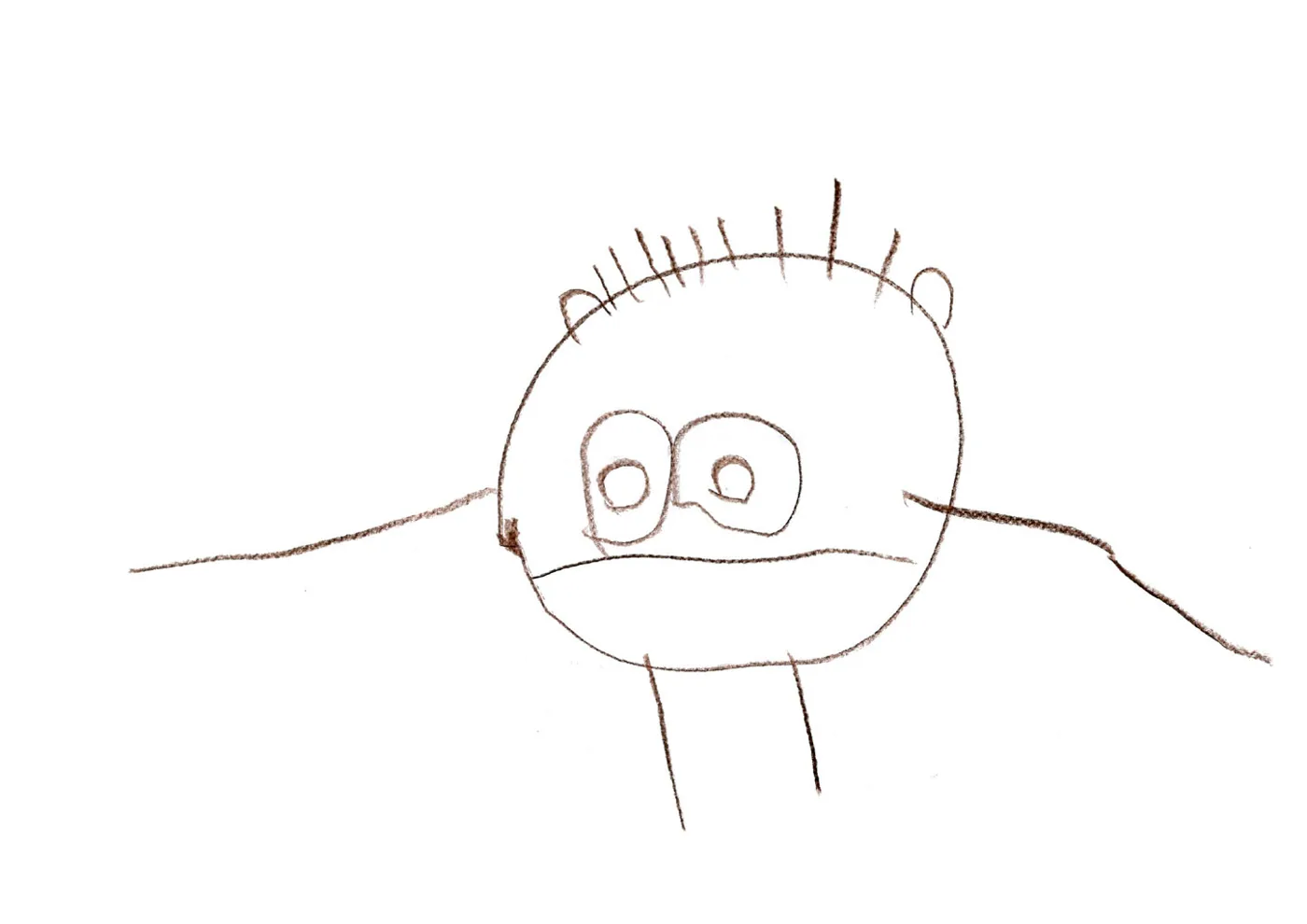
Fine motor. The circle usually comes first, then crosses and other simple shapes, then the first deliberate representational drawings, often a head with legs coming straight out of it. Pencil grip is typically still a whole-hand or early tripod grip and is not worth correcting at this stage.
Self-regulation. This is the one that moves most and gets the least credit. Waiting a moment, accepting a no, recovering from a disappointment without a full collapse: these build gradually across the year and are the strongest predictors of how a child copes in a group setting.
Why comparison with other children misleads
Three specific traps catch almost every parent at this stage.
The visible skill bias. Reciting the alphabet is loud, performable and easy to show off at a party. Sustained turn-taking in conversation is quiet and happens at home. So the skills parents observe in other children are systematically the memorised ones, which gives a badly skewed sample.
The birthday gap. Within a single nursery room, children can be eleven months apart. At three, eleven months is close to a third of the child's life. The oldest in the room will look dramatically more capable than the youngest for reasons that have nothing to do with either child's trajectory.
The snapshot problem. Development at this age is lumpy rather than linear. Children plateau while consolidating, then move in a rush. A child who seems stuck for two months and then adds a hundred words is following an entirely normal pattern, but a snapshot taken during the plateau reads as a gap.
The useful comparison is your own child against themselves six months ago. Direction of travel tells you far more than position does.
What actually helps at home
The research-backed answers are unglamorous and mostly free.
Conversation, not instruction
The single most valuable thing at three is back-and-forth talk. Not talking at a child, but exchanges: asking something, waiting for the answer, responding to what they actually said, and waiting again. Three year olds are slow to formulate replies, and the pause before they answer is the part adults most often fill in for them.
Open questions do more than closed ones. What is happening here beats is that a dog. Why do you think he did that beats what color is the ball. The CDC item about describing the action in a picture is essentially this skill.
Reading together, repeatedly
Reading the same book for the fortieth time is not wasted effort, it is how children move from listening to anticipating to retelling. Let them turn pages, finish sentences and correct you when you deliberately get it wrong.
Play that has a plan in it
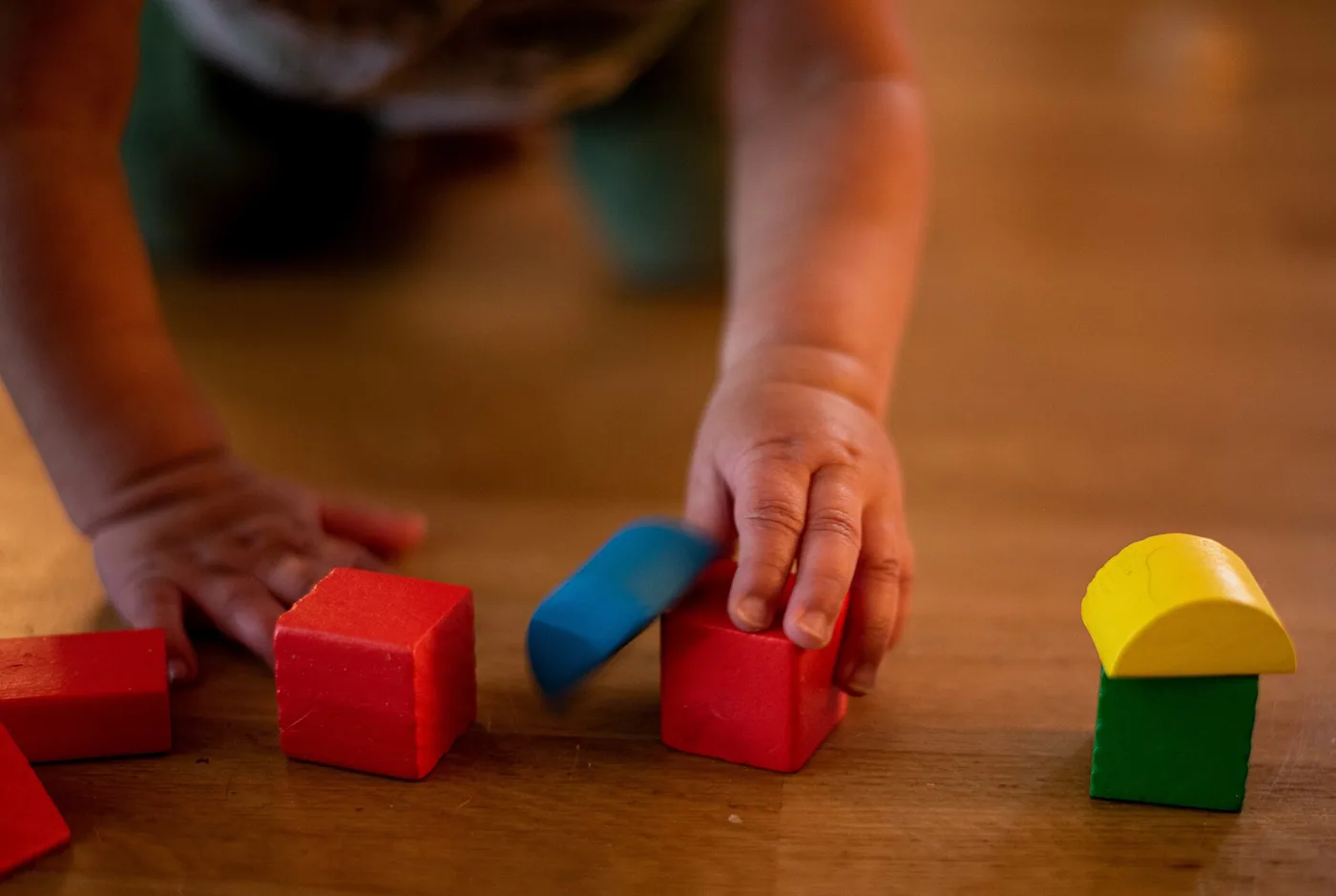
Blocks, threading, sorting, pretend cooking, dressing up. What these share is a sequence held in mind across several steps, which is exactly the skill underneath both the bead-stringing milestone and later classroom work. Pretend play in particular carries a lot of language, because children narrate it.
Letting them do the slow version themselves
Putting on a jacket, using a fork, carrying a cup. Every one of these is a milestone, and every one is faster if an adult does it. The practice is the point. Building a few extra minutes into the morning so a child can do their own coat is a genuine educational investment, which sounds absurd and is true.
Time with other children
Noticing other children and joining their play cannot be practised alone. A playgroup, a park, a cousin, a nursery session: the setting matters less than the repeated opportunity.
A word on screens and apps
Educational apps aimed at this age tend to teach the memorised layer, letters and numbers as sequence, because that is what is easy to make into a game and easy for a parent to see.
That is the opposite of where the value is at three. An app cannot wait for a child to formulate a sentence, respond to what they actually said, or follow a tangent about a dog they saw yesterday. The back-and-forth exchange is the thing that matters, and it requires a person.
This is not an argument for zero screens. It is an argument against counting screen learning as the educational part of the day, and against feeling reassured because a child can tap the right letter.
What preschool settings actually look for
Parents often assume preschool entry is about academic readiness. Talk to early years staff and the list that comes back is different.
Can the child separate from a caregiver and settle within a reasonable time. Can they communicate a need, including going to the toilet. Can they follow a simple instruction with one or two steps. Can they tolerate a transition between activities without it ending the day. Can they be near other children and, increasingly, with them.
Every one of those maps to the milestone list and none to the alphabet. If you want to prepare a child for preschool, practise the goodbye, the asking for help and the tidying up at the end of an activity.
When to raise it with a doctor
The CDC's own framing is the right one here, and it is blunt: do not wait.
Raise it with your child's doctor if your child is not meeting one or more milestones, if they have lost a skill they previously had, or if you simply have concerns of your own. Ask specifically about developmental screening, which uses validated tools rather than a checklist. If you or the doctor remain concerned after that, ask for a referral to a specialist, and contact your state or territory early intervention program, which you can find through the CDC's directory.
Two patterns are worth particular attention at three: speech that familiar adults outside the household cannot understand most of the time, and little interest in interacting with other children or in back-and-forth exchange with adults. Neither one means a particular diagnosis. Both are good reasons to ask for screening rather than to wait another six months.
It is also worth saying that acting early costs very little when nothing turns out to be wrong, and matters a great deal when something is. Parents who raise a concern and are reassured have lost an appointment. The reverse error is more expensive.
Common questions
Should a 3 year old know the alphabet?
It is not a milestone at three. Many three year olds can sing the alphabet song, which is memorised sequence rather than letter knowledge, and some can recognise a few letters, often starting with the first letter of their own name. Neither is expected, and reading together does more for later literacy than letter drilling.
Should a 3 year old be able to count?
Reciting numbers is common and is not the meaningful skill. One-to-one correspondence, touching each object once while saying one number per object, is what counting actually means, and it typically starts with very small sets at this age.
My child talks constantly but strangers cannot understand them. Is that a problem?
The CDC milestone is talking well enough for others to understand most of the time by three. Family members decode their own child far better than outsiders do, so a stranger's difficulty is more informative than yours. If people outside the household frequently cannot follow your child, that is a reasonable thing to raise with your doctor and ask about screening.
Is it normal for a 3 year old to play alone?
Playing alone some of the time is completely normal at three, and so is playing alongside other children rather than with them. The milestone is noticing other children and joining them, which develops across this year. Consistently showing no interest in other children is worth mentioning to your doctor.
How many words should a 3 year old have?
Milestone guidance at three is framed around what the child can do with language, conversing, questioning, describing, being understood, rather than around a word count. That framing is deliberate, because usable communication predicts more than vocabulary size does.
My child is ahead on letters and behind on dressing. Should I worry?
Uneven profiles are the norm rather than the exception. What is worth watching is whether any area is persistently and substantially behind, and whether skills are being gained over time. Share the uneven picture with your doctor at the next visit rather than treating one strength as compensation for one gap.
The bottom line
What a three year old should know educationally is mostly not academic. It is holding a conversation with real back-and-forth, asking questions, being understood by people outside the family, noticing and joining other children, copying a circle, stringing beads, managing a fork and a jacket. Those are the skills that the alphabet and the numbers will later be built on.
If your child is doing most of those things, the fact that a neighbour's child counts to twenty tells you about that child's memory for sequence, not about your child's prospects. If your child is not doing several of them, or has lost something they used to do, the right move is not more practice at home but a call to the doctor, because early help is the one thing that reliably changes outcomes.