
Tailbone pain has a particular cruelty to it: the position that should be restful is the one that hurts. The coccyx is a small, bony, poorly padded structure right at the base of the spine, and almost everything you do in bed either presses on it directly or tugs on the muscles and ligaments attached to it. People who have never thought about this bone in their lives suddenly find themselves awake at three in the morning doing geometry with pillows.
This article covers what actually changes the pressure on your coccyx at night: position, pillow placement, the surface underneath you, and the habits around bedtime that make the first twenty minutes bearable. It is written as practical guidance for managing discomfort, not as medical advice. Coccydynia has many causes, some of which need proper assessment, and the section on warning signs near the end is the part to read first if anything there sounds familiar.
Why the tailbone hurts specifically at night
Three things change when you lie down, and each one can make coccyx pain worse.
The first is direct pressure. Sitting and lying on your back both load the coccyx, but lying down does it differently. When you sit, your weight is spread across the two sitting bones and the soft tissue between them, with the coccyx taking a share. When you lie flat on your back on a firm surface, there is nothing between the tailbone and the mattress except skin and a thin layer of tissue. The whole weight of your pelvis presses that small bone into the surface.
The second is muscle tension. Several muscles of the pelvic floor attach to the coccyx, along with ligaments that run to the sacrum and the hip. Lying with your legs straight lengthens some of these and shortens others. If those tissues are already irritated, holding them at an end-range position for hours is enough to produce a deep ache even without direct pressure.
The third is stillness. During the day you shift constantly and the loaded area changes every few minutes. Asleep you may hold one position for an hour or more, which gives pressure time to accumulate in one spot. This is why the pain is often worst on waking rather than on going to bed.
The positions, ranked by how much they unload the coccyx
Side lying with a pillow between the knees
This is the position most sources point to first, and the mechanism is simple: on your side, the tailbone is not in contact with the mattress at all. Load moves to the hip and shoulder, which are better padded and better designed to take it.
The pillow between the knees is not optional. Without it, the upper leg drops forward and down, which rotates the pelvis and twists the lower spine, and that twist pulls on the same structures attached to the coccyx that you are trying to settle. The pillow keeps the upper leg roughly parallel to the mattress so the pelvis stays stacked.
Two refinements make a noticeable difference. Use a firm pillow rather than a soft one, since a soft pillow compresses to nothing within an hour and you wake up twisted anyway. And if you can manage it, use a longer pillow or a second one so the support extends down toward the ankles rather than stopping at the knees, which keeps the whole leg aligned instead of letting the lower leg drag the knee down.
On your back with a pillow under the knees
If side sleeping is not available to you, this is the next best arrangement. Raising the knees rolls the pelvis very slightly backward and flattens the lower back toward the mattress, which redistributes weight away from the point of the coccyx and across the sacrum and buttocks instead.
The height matters. A pillow that only just lifts the knees does little. One that lifts them too high flattens the lumbar curve excessively and trades tailbone pain for lower back ache. A firm pillow or a folded blanket that holds a steady height under both knees is better than a soft one that collapses unevenly.
Some people add a small, thin cushion under the lower back at the same time, which supports the lumbar curve while the knees stay raised. Whether that helps is individual, so try it on a night when you are willing to experiment rather than on a night you badly need sleep.
Flat on your back with legs straight
This is the position to avoid. Legs straight and no knee support puts the pelvis in its most tilted position and sends a surprising amount of weight directly into the tailbone. If you wake up in this position regularly, a knee pillow that stays put is worth more to you than any cushion placed under the hips.
Face down
Most guidance advises against stomach sleeping, because it arches the lower back and rotates the neck, which tends to add problems rather than remove them. That said, it does take the tailbone completely off the mattress, and people with severe coccyx pain sometimes find it is the only position they can tolerate. If it is the only thing that works for you, place a flat pillow under the hips and pelvis to reduce the arch in the lower back, and use the flattest possible pillow under the head, or none at all.
Cushions: what they do and when they are worth it
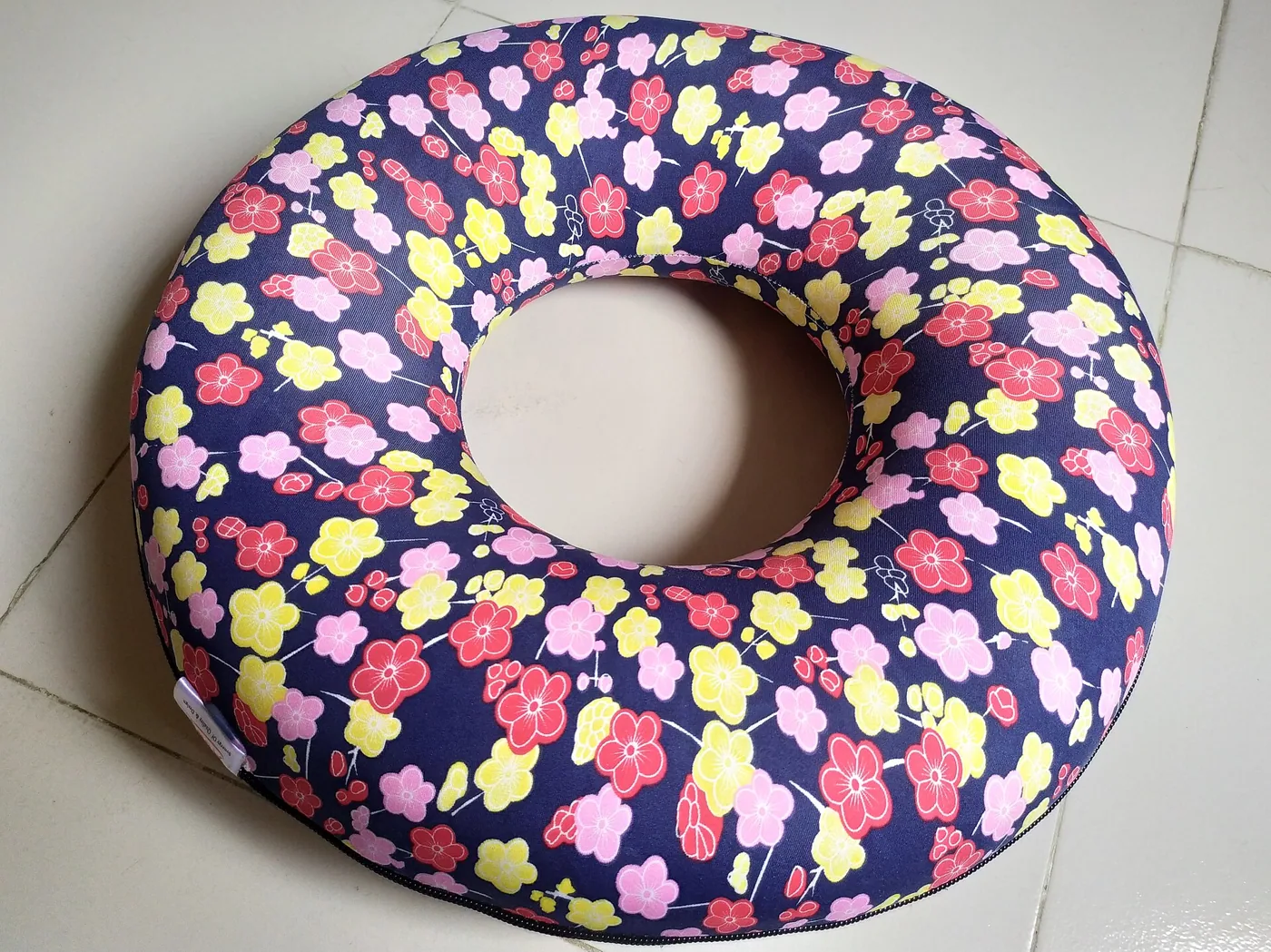
A coccyx cushion is a seat cushion with a wedge or channel cut out of the rear section, so that the tailbone hangs over an empty space instead of pressing on the surface. They are genuinely effective and they are primarily a sitting tool rather than a sleeping one.
This distinction gets lost in a lot of advice. For most people with coccyx pain, the largest daily load on the tailbone comes from sitting, not from sleeping. Eight hours in a desk chair with no cutout cushion will produce pain that then shows up in bed, and no amount of pillow rearrangement at night will fix a problem being created during the day. If you only make one change, make it the chair.
For night use, a small flat cushion or folded towel placed under the hips when lying face down is more useful than a ring cushion, which is awkward to position and tends to shift as soon as you move. Ring cushions can also tip into being counterproductive if they concentrate pressure on the ring itself.
What your mattress is doing
Mattress firmness changes how pressure is distributed, and the relationship is not the one most people expect.
A very soft mattress feels kind at first contact and often makes coccyx pain worse. The reason is that the hips, which are the heaviest part of the body, sink deepest. As they sink, the pelvis rotates and the surface closes around it, so pressure that should be spread across a wide area ends up concentrated on the bony points that reach furthest down. For a tailbone that already hurts, that is the opposite of what you want.
A very firm mattress has a different failure. On your side, a firm surface does not let the shoulder and hip sink in, so the spine bows and the pelvis has to twist to find contact. That twist loads the structures attached to the coccyx.
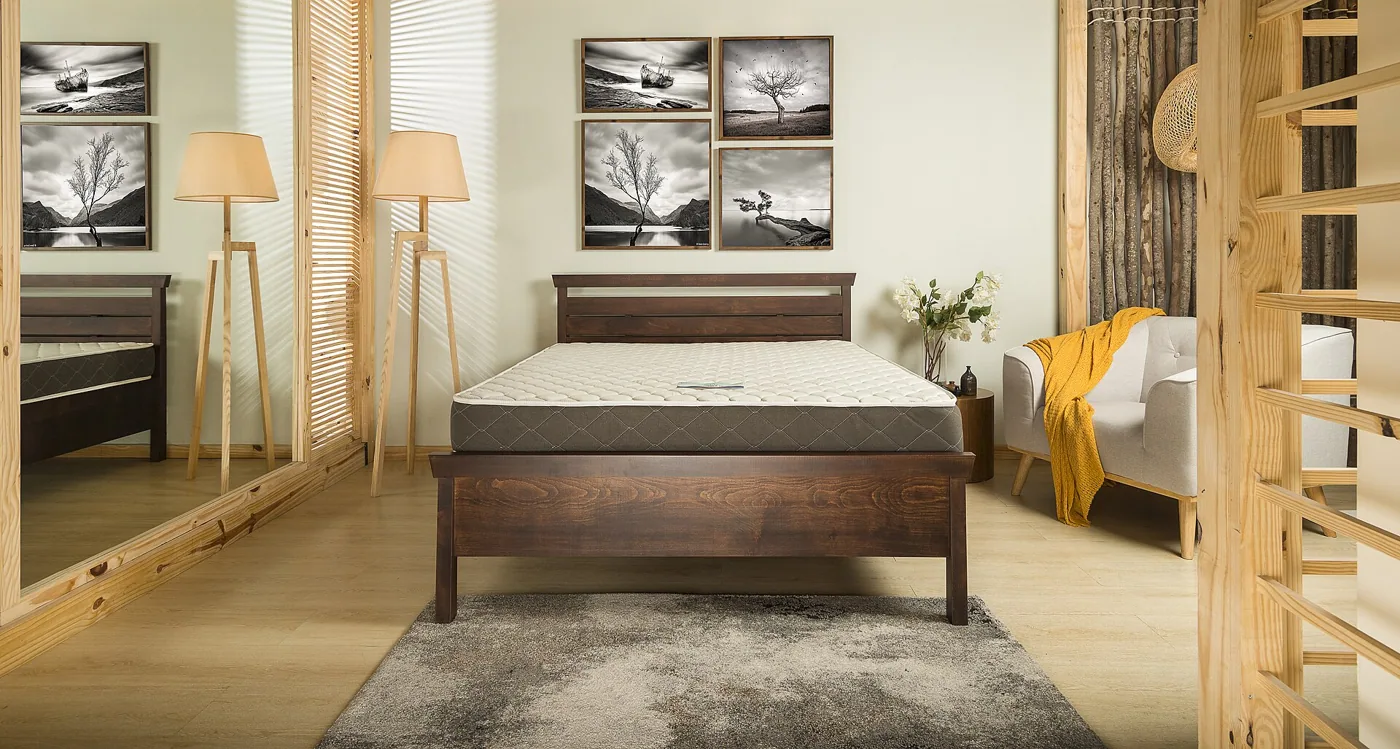
Medium-firm sits between the two for most people, which is why it is the usual recommendation. It supports the pelvis without letting it sink, and still gives enough at the shoulder and hip for side lying.
If replacing a mattress is not realistic, a firm mattress topper over a sagging bed costs far less and addresses the specific problem of hips sinking too deep. Check the bed frame too: slats that have spread apart or a worn centre support produce a dip right under the pelvis that no topper will correct.
Bedding details people overlook
Beyond the mattress itself, three smaller things change how the surface behaves under your pelvis.
The topper. A two to three inch firm foam topper over a soft or sagging mattress is the cheapest meaningful change available. It stops the hips sinking into the dip without replacing the bed. A soft memory foam topper does the opposite and usually makes coccyx pain worse, so firmness is the specification that matters here, not thickness.
The slats and the frame. Sprung slats that have bowed, spread or cracked create a hollow directly under the heaviest part of the body, which is the pelvis. If the mattress dips in the middle when nobody is on it, the frame is the problem and no bedding change will correct it. Check the centre support rail too, since a missing or loose centre leg is a common cause of a mattress that was fine for years and is suddenly not.
Tucked bedding. Tightly tucked sheets and a heavy duvet pin your legs in place and resist the knee pillow, pulling the upper leg back down toward the mattress overnight. Loosening the bottom of the bed, or using a lighter cover, lets the knee pillow keep doing its job until morning.
The hour before bed
Several small habits change how the first part of the night goes.
Heat or ice applied to the lower back or tailbone for ten to fifteen minutes before bed is commonly suggested. Which one helps is individual. Heat tends to suit muscular tightness and ice tends to suit an area that feels inflamed and tender to touch. Use a cloth barrier either way, and do not sleep with a heating pad on.
Gentle movement before lying down often helps more than stretching hard. A few minutes of easy hip and lower back movement, knees rocking side to side while lying on your back, or a slow seated forward fold, settles the area better than an aggressive stretch that provokes it.
Set the pillows up before you get in rather than after. Arranging a knee pillow while already lying down means moving through the positions that hurt. Build the arrangement first, then lower yourself into it.
Plan how you get out of bed too. Rolling onto your side and pushing up with your arms, rather than sitting straight up from your back, avoids loading the tailbone through the movement that usually hurts most.
Why the daytime matters more than the night
It is worth stating plainly: for most people with coccydynia, sleep position is the smaller half of the problem.
Sitting is what loads the coccyx hardest, especially sitting leaned back on a soft surface, which rotates the pelvis and puts the tailbone in contact with the seat. A deep, soft sofa is one of the worst surfaces for this, because it encourages exactly that posture. If evenings on the sofa are followed by bad nights, the sofa is a reasonable suspect, and a firmer seat or an upright seat depth changes more than a different pillow will. Our guide to sectional sofas explains how seat depth changes posture, which is the relevant variable here.
The same applies at a desk. A cutout cushion on a firm chair, feet flat on the floor, and getting up every half hour does more for night-time pain than any bedroom adjustment.
Four pillow setups, and what each one actually changes
Most of the advice around tailbone pain reduces to where you put a pillow. It is worth being precise about what each placement does mechanically, because that tells you which one to reach for.
Between the knees, side lying. Keeps the upper leg parallel to the mattress so the pelvis stays stacked rather than rotating forward. This is the placement that does the most, because it preserves the one position where the coccyx touches nothing. A firm pillow holds this all night; a soft one gives out in an hour.
Under the knees, back lying. Tilts the pelvis backward a few degrees and reduces the arch in the lower back, moving the contact area from the point of the coccyx onto the broader sacrum and buttocks. Think of it as spreading the load rather than removing it.
Under the hips, face down. Reduces the lower back arch that makes stomach sleeping problematic. If face down is the only position you can tolerate, this is what makes it survivable, along with the flattest possible head pillow.
Behind the back, side lying. A pillow tucked along your back stops you rolling onto your back in your sleep. This is the quiet fix for people who go to bed in a good position and wake up in a bad one, and it is worth trying before concluding that side sleeping does not help.
The movements around sleep, not just the sleep
A lot of the pain people attribute to sleeping actually happens in the thirty seconds either side of it.
Getting into bed from a seated position on the edge of the mattress loads the coccyx hard, because sitting on a yielding surface rotates the pelvis backward and puts the tailbone in contact. The alternative is to sit further forward on the mattress edge, keep your weight on the sitting bones rather than leaning back, then lower yourself onto your side in one movement with your knees already bent.
Getting out is the same movement reversed. Roll onto your side first, let both knees come toward the edge, then push up with the lower arm so your torso rises as your legs drop. Sitting straight up from your back makes the tailbone the pivot point for the whole movement, which is why that one often produces a sharp stab.
Turning over during the night is worth practising while awake. Bringing the knees together and rolling as one unit, rather than letting the top leg swing across first, avoids the twist through the pelvis. It sounds fussy, and after a few nights it becomes automatic.
When to stop experimenting and see a doctor
Most tailbone pain settles over weeks. Some does not, and some signals something that needs assessment rather than management.
See a doctor if the pain has lasted more than a few weeks without improving, if it followed a fall or an injury, if it is getting worse rather than better, or if it is severe enough to disrupt sleep consistently. Seek care promptly if there is fever, if there is any change in bowel or bladder function, if there is numbness in the area between the legs, or if you notice weakness in a leg. Those combinations need proper evaluation and are not something to work around with pillows.
Pregnancy-related tailbone pain is common and usually has its own management, so raise it with your midwife or doctor rather than relying on general advice. The same applies if you have osteoporosis, a history of pelvic surgery, or are taking medication that affects bone density.
Nothing in this article is a substitute for an assessment by a clinician who can examine you. It describes what commonly helps with comfort, which is a different thing from treating a cause.
Common questions
What is the single best sleeping position for tailbone pain?
Side lying with a firm pillow between the knees, because it takes the coccyx off the mattress entirely rather than merely reducing the pressure on it. If side lying does not work for you, back sleeping with a pillow under the knees is the usual second choice.
Should I put a pillow under my tailbone?
Generally no. A pillow under the tailbone itself tends to raise the area into contact rather than away from it. What helps on your back is support under the knees, which changes the pelvic angle, and what helps face down is a flat cushion under the hips, which reduces the arch in the lower back.
Do donut cushions work?
Cutout and wedge cushions work well for sitting, which is where most coccyx loading happens. For sleeping they are awkward, since they shift as you move and are not designed for lying on. Treat them as a daytime tool.
Is a firm or soft mattress better for tailbone pain?
Medium-firm suits most people. A soft mattress lets the hips sink, which concentrates pressure on the bony points rather than spreading it. A very firm mattress prevents the shoulder and hip from sinking enough for comfortable side lying, which introduces a pelvic twist. If you cannot replace the mattress, a firm topper over a sagging one addresses the main problem cheaply.
Why is it worse in the morning?
Because pressure accumulates when you hold one position for hours without the small shifts you make all day. Pain that is worst on waking and eases as you move around is a common pattern, and it points toward position and surface rather than toward something structural, though that is not a diagnosis.
How long should it take to settle?
Many episodes ease over a few weeks with less sitting pressure and better positioning. Pain that persists beyond that, or that is worsening, should be assessed rather than managed with cushions indefinitely.
The bottom line
The arrangement that helps most people is unglamorous: on your side, a firm pillow between the knees running as far toward the ankles as is comfortable, on a medium-firm surface, with the pillows set up before you get in. On your back, the equivalent is a pillow under the knees, and flat with straight legs is the position to design your way out of.
Then look at your day. The tailbone takes far more load from sitting than from sleeping, and a cutout cushion on a firm seat is often the change that makes the nights improve. And if the pain is not settling over weeks, or anything in the warning signs section applies, that is the point to stop rearranging the bedroom and get it looked at.